The Importance of Dhikr After Salah: Strengthen Your Connection with Allah
Every Salah is one of the greatest acts of worship a Muslim performs each day. However, our worship should not end with the Tasleem. The moments immediately after prayer are among the most blessed times to remember Allah through Dhikr (remembrance).
The Prophet Muhammad ﷺ consistently recited specific supplications after every obligatory prayer, teaching us that Dhikr completes our worship, brings forgiveness, and fills our hearts with peace.
Allah says:
"So when you have finished the prayer, remember Allah while standing, sitting, and lying on your sides."
(Surah An-Nisa 4:103)
Another verse reminds us:
"O you who believe! Remember Allah with much remembrance."
(Surah Al-Ahzab 33:41)
What Is Dhikr?
Dhikr means remembering Allah through words, praise, supplication, and reflection. It includes glorifying Allah, thanking Him, seeking His forgiveness, and affirming His greatness.
After Salah, Dhikr allows believers to continue their connection with Allah before returning to their daily responsibilities.
Why Is Dhikr After Salah Important?
The Prophet ﷺ never rushed away immediately after prayer. Instead, he would spend time remembering Allah and teaching his companions to do the same.
Making Dhikr after every Salah helps us:
- Strengthen our relationship with Allah
- Increase rewards
- Seek forgiveness
- Find inner peace
- Complete our worship properly
- Develop consistency in remembrance
Authentic Dhikr After Salah
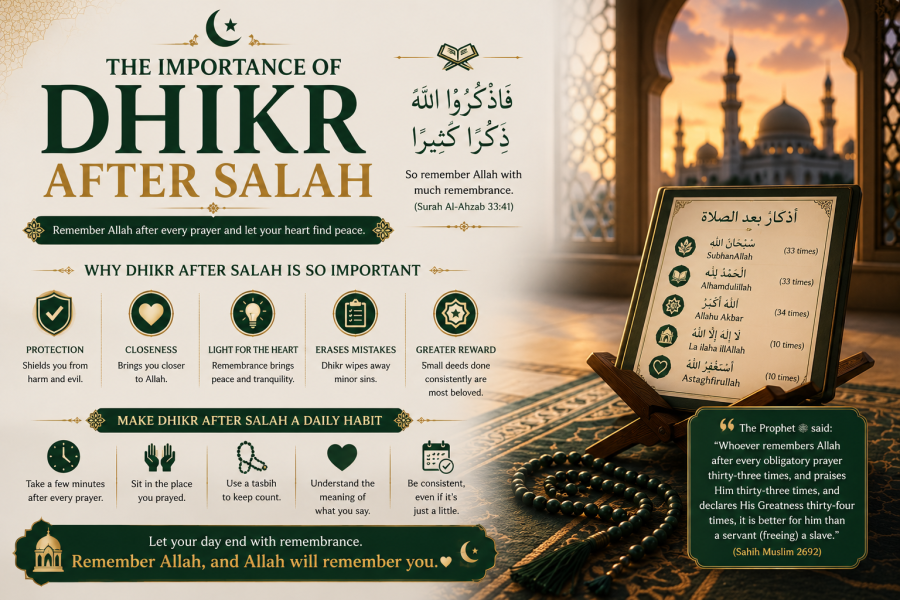
1. Say "Astaghfirullah" Three Times
Immediately after finishing Salah, the Prophet ﷺ would seek Allah's forgiveness by saying:
Astaghfirullah (three times)
Then he would say:
Allahumma Antas-Salam wa minkas-salam, tabarakta ya Dhal-Jalali wal-Ikram.
Meaning:
"O Allah, You are Peace, and from You comes peace. Blessed are You, O Possessor of Majesty and Honor."
Reference: Sahih Muslim (591)
2. Recite Ayatul Kursi
The Prophet ﷺ encouraged believers to recite Ayatul Kursi (Surah Al-Baqarah 2:255) after every obligatory prayer.
It is among the greatest verses in the Qur'an and reminds us of Allah's perfect knowledge, power, and protection.
3. Tasbih Fatimah
One of the most beloved remembrances after Salah is:
- SubhanAllah – 33 times
- Alhamdulillah – 33 times
- Allahu Akbar – 34 times
The Prophet ﷺ taught this Dhikr to his daughter Fatimah (RA), and Muslims continue this beautiful Sunnah today.
Reference: Sahih al-Bukhari (3705), Sahih Muslim (2727)
4. Say "La ilaha illallah"
Complete your remembrance by saying:
La ilaha illallahu wahdahu la sharika lah, lahul-mulku wa lahul-hamdu wa huwa 'ala kulli shay'in qadir.
This declaration of Tawhid carries immense reward and reminds us that all praise and dominion belong to Allah alone.
Benefits of Dhikr After Salah
1. Brings Peace to the Heart
Allah says:
"Verily, in the remembrance of Allah do hearts find rest."
(Surah Ar-Ra'd 13:28)
Dhikr calms anxiety and strengthens the believer's trust in Allah.
2. Erases Minor Sins
The Prophet ﷺ taught that sincere remembrance after prayer is a means of forgiveness for minor sins by Allah's mercy.
3. Increases Rewards
Simple phrases such as "SubhanAllah" and "Alhamdulillah" weigh heavily on the scale of good deeds despite taking only a few moments to recite.
4. Keeps You Connected to Allah
Instead of rushing back to worldly matters, Dhikr allows the heart to remain focused on Allah even after Salah has ended.
5. Strengthens Consistency in Worship
Praying five times daily naturally creates five opportunities to remember Allah through authentic Dhikr.
Over time, this habit transforms the heart and strengthens faith.
Tips for Building the Habit
- Stay seated for a few minutes after every Salah.
- Memorize one Dhikr at a time.
- Understand the meanings of what you recite.
- Use a digital Tasbih or your fingers to count.
- Encourage family members to recite together.
Small, consistent acts of worship are beloved to Allah.
Continue Your Dhikr Journey with Zabi
Zabi helps Muslims stay consistent with authentic remembrance by providing:
- Daily Morning & Evening Adhkar
- Authentic Duas
- Holy Qur'an
- Prayer Times
- Qibla Direction
- Islamic Calendar
- AI Islamic Assistant
- Educational Islamic Articles
Whether you have just finished Salah or are learning new supplications, Zabi helps you remember Allah throughout the day.
Conclusion
Dhikr after Salah is one of the simplest yet most rewarding Sunnahs of the Prophet ﷺ. Spending just a few minutes after each prayer remembering Allah brings peace to the heart, forgiveness for sins, and countless rewards.
Make it your daily habit to remain seated after every obligatory prayer and complete the authentic remembrances taught by the Prophet ﷺ.
May Allah ﷻ make us among those whose tongues remain moist with His remembrance, whose hearts find peace in His worship, and whose deeds are accepted in this life and the Hereafter. Ameen.
Frequently Asked Questions
Why should I do Dhikr after Salah?
Dhikr after Salah follows the Sunnah of the Prophet ﷺ and helps believers seek forgiveness, increase rewards, and maintain a strong connection with Allah.
What should I recite after every Salah?
Among the authentic remembrances are:
- Astaghfirullah (3 times)
- Allahumma Antas-Salam...
- Ayatul Kursi
- SubhanAllah (33)
- Alhamdulillah (33)
- Allahu Akbar (34)
- La ilaha illallahu wahdahu la sharika lah...
Is Dhikr after Salah obligatory?
No. It is a highly recommended Sunnah (Mustahabb) with great rewards.
Can I make personal dua after Dhikr?
Yes. Many scholars encourage making sincere personal supplications after completing the prescribed Dhikr.
How long does Dhikr after Salah take?
Around 3–5 minutes, depending on your pace, making it one of the easiest daily acts of worship.