
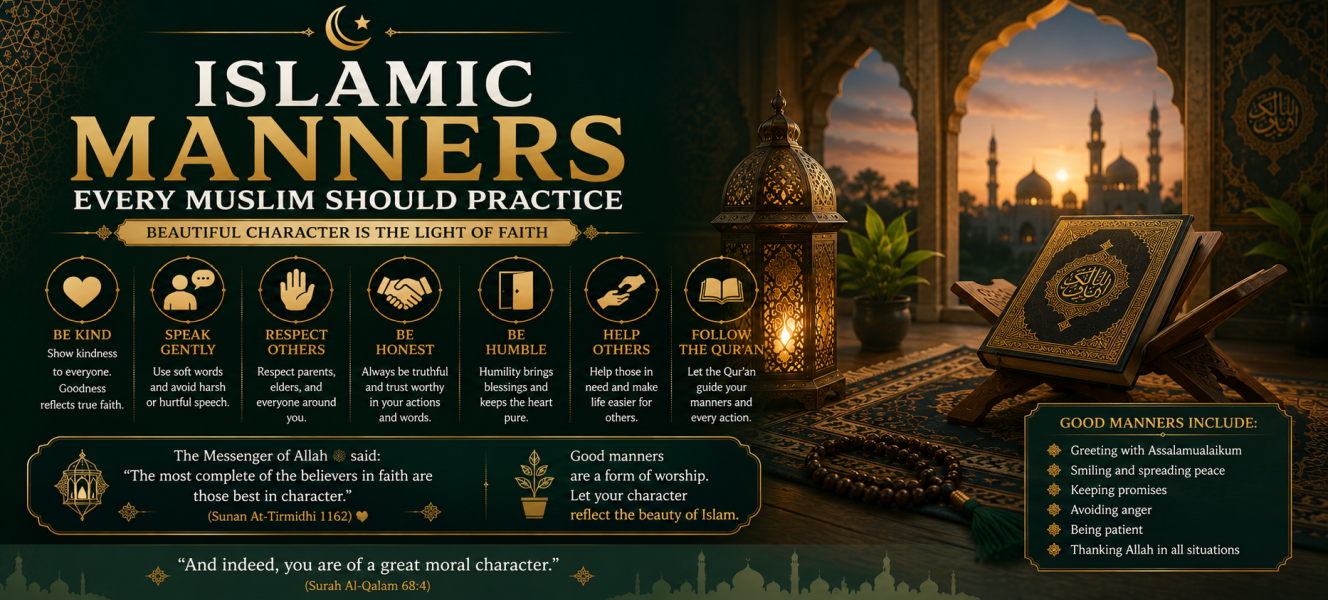
Islamic Manners Every Muslim Should Practice
Islam is not only a religion of worship but also a complete way of life. One of the most beautiful aspects of Islam is its emphasis on good manners (Akhlaq). Our character reflects our faith, and every interaction with others is an opportunity to earn the pleasure of Allah ﷻ.
The Prophet Muhammad ﷺ was sent to perfect noble character, making good manners an essential part of every Muslim's life.
Allah says:
"And indeed, you are of a great moral character."
(Surah Al-Qalam 68:4)
Following the example of the Prophet ﷺ helps us build stronger relationships, create a positive society, and grow closer to Allah.
Why Are Good Manners Important in Islam?
Good character is among the greatest acts of worship. Islam teaches us that kindness, honesty, patience, and respect are not optional—they are qualities every believer should strive to develop.
The Prophet ﷺ said:
"The best among you are those who have the best manners and character."
Reference: Sahih al-Bukhari (3559)
This hadith reminds us that our treatment of others is a reflection of our faith.
Essential Islamic Manners Every Muslim Should Practice
1. Speak Kindly
Our words have great power. Islam encourages us to speak gently and avoid hurtful speech.
The Prophet ﷺ said:
"Whoever believes in Allah and the Last Day should speak good or remain silent."
Reference: Sahih al-Bukhari (6018), Sahih Muslim (47)
Before speaking, ask yourself:
- Is it true?
- Is it beneficial?
- Is it kind?
2. Be Honest
Honesty is one of the greatest qualities of a believer.
Whether in business, family matters, or daily conversations, Muslims should always be truthful.
Honesty builds trust and earns Allah's pleasure.
3. Respect Parents and Elders
Islam places tremendous importance on honoring parents and showing respect to elders.
Allah says:
"And lower to them the wing of humility out of mercy and say, 'My Lord, have mercy upon them as they brought me up when I was small.'"
(Surah Al-Isra 17:24)
Respect should also extend to teachers, neighbors, and everyone in society.
4. Be Kind to Everyone
Kindness should not be limited to family and friends.
Show compassion to:
- Neighbors
- Children
- Elderly people
- Guests
- The poor and needy
- Even animals
Small acts of kindness can become great deeds in the sight of Allah.
5. Keep Your Promises
A Muslim should honor commitments whenever possible.
Keeping promises demonstrates honesty, integrity, and responsibility.
Breaking promises without valid reasons harms trust and relationships.
6. Practice Patience
Life brings challenges, but patience (Sabr) is one of the greatest virtues.
Remain patient during:
- Difficult times
- Family disagreements
- Workplace challenges
- Delays and disappointments
Allah loves those who are patient.
7. Be Humble
Humility is a hallmark of true faith.
Avoid arrogance, pride, and looking down on others.
The Prophet ﷺ lived a simple life despite being the greatest of creation.
True honor comes from humility before Allah.
8. Control Your Anger
Everyone experiences anger, but Islam teaches us to manage it wisely.
The Prophet ﷺ said:
"The strong person is not the one who overpowers others, but the one who controls himself when angry."
Reference: Sahih al-Bukhari (6114), Sahih Muslim (2609)
When angry:
- Remain silent.
- Seek refuge with Allah.
- Perform Wudu if needed.
- Walk away from unnecessary arguments.
9. Smile and Spread Peace
Smiling is an act of charity in Islam.
Greeting others with "Assalamu Alaikum" spreads peace and strengthens brotherhood.
Simple gestures often leave lasting positive impressions.
10. Help Others
Helping people is among the most beloved deeds to Allah.
Offer assistance whenever you can:
- Support family members.
- Help neighbors.
- Give charity.
- Volunteer your time.
- Comfort those who are struggling.
Every act of kindness is rewarded by Allah.
The Rewards of Good Character
Practicing Islamic manners brings countless benefits:
- Increases love among people.
- Strengthens family relationships.
- Builds trust within society.
- Brings peace to the heart.
- Reflects the beauty of Islam.
- Earns Allah's pleasure.
- Raises one's status in the Hereafter.
Good manners are a form of worship that benefits both this life and the next.
Practical Ways to Improve Your Character
Improving your manners takes consistent effort.
Try these simple habits:
- Begin every conversation with kindness.
- Say "JazakAllahu Khayran" when someone helps you.
- Apologize sincerely when you make mistakes.
- Control your tongue.
- Make dua for good character.
- Read about the life of the Prophet ﷺ.
- Reflect on your actions each day.
Even small improvements can have a lasting impact.
Live the Teachings of Islam with Zabi
Building good character becomes easier when you're connected to authentic Islamic guidance.
With Zabi, you can:
- Read the Holy Qur'an anytime.
- Access authentic Duas and Adhkar.
- View accurate prayer times.
- Find the Qibla direction.
- Follow the Islamic calendar.
- Explore educational Islamic articles.
- Strengthen your daily worship and character.
Whether you're learning Islamic manners or striving to improve your relationship with Allah and others, Zabi is your trusted companion on the journey.
Conclusion
Good manners are among the greatest treasures a Muslim can possess. Worship is not limited to prayer and fasting—it is also reflected in the way we speak, treat others, fulfill promises, and show kindness.
Every smile, every honest word, and every act of patience brings us closer to Allah and beautifies our faith.
May Allah ﷻ bless us with sincere hearts, beautiful character, and the ability to follow the noble example of Prophet Muhammad ﷺ in every aspect of our lives. Ameen.
Frequently Asked Questions (SEO)
What are Islamic manners?
Islamic manners are the ethical behaviors and good character traits taught by the Qur'an and the Sunnah, including honesty, kindness, humility, patience, and respect.
Why is good character important in Islam?
Good character reflects true faith and is among the most beloved qualities in Islam. The Prophet ﷺ emphasized that the best believers are those with the best manners.
How can I improve my Islamic manners?
Practice speaking kindly, control your anger, be honest, respect others, keep your promises, and regularly seek Allah's guidance through dua and self-reflection.
Does Islam encourage kindness to everyone?
Yes. Islam teaches kindness toward family, neighbors, friends, strangers, and even animals, making compassion a fundamental part of a Muslim's character.
What did the Prophet Muhammad ﷺ say about good manners?
The Prophet ﷺ said, "The best among you are those who have the best manners and character." (Sahih al-Bukhari).